July 24, 2026
No one gets into the nonprofit sector because they’re excited about paperwork. But because nonprofits are legally corporations, what they need to run sometimes lies outside the expertise of those individuals most driven to serve their communities. This isn’t because community leaders aren’t competent. It’s because the passions of nonprofit leaders lie with their organizational missions. However, some individuals are specifically trained to navigate that liminal space between activism and business law: attorneys.
The unique skillsets of attorneys are a powerful resource to nonprofit leaders, at least when they have access. And since its founding, MCR has worked to make that connection. Now, in response to the recent challenges facing the nonprofit sector, MCR has strengthened its legal team to pivot fully into the kind of support nonprofits need right now.
This summer, MCR welcomes Calder Burgam and Freyja Harris to the team headed by Director of Legal Programs Justin Sheehan. Their work will scale up our legal programs, expanding the ability of our legal team to support our clients and making cross-sector connections to ensure our networks are prepared to support nonprofits in fulfilling their missions.
Two new attorneys
Calder Burgam, Legal Program Manager, comes to MCR with a background in both law and nonprofit work. After nearly a decade in the nonprofit sector, working towards political campaign financial transparency with the National Institute on Money in Politics and food security in New Jersey with Arm in Arm, he went to law school at Wayne State University and spent some time at Fink Bressack for hands on experience. By joining MCR, he returns to his nonprofit sector roots.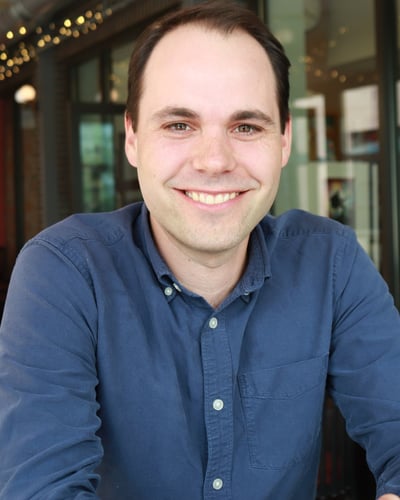
“I went to law school to better understand, and eventually help shape, the systems that can make life better for people,” Calder explains.
“I was drawn to MCR because it is uniquely positioned to help grassroots nonprofits navigate the current environment. As far as I am aware, MCR is the only organization in the state dedicated to serving small and midsize nonprofits with pro bono legal services. I hope that by working with organizations to develop strong foundations and overcome obstacles, nonprofits will be able to focus their passion and creativity on solving the problems they were created to address.”
Beyond the complexities of the systems that govern nonprofit work, Burgam sees the work in the sector as something else: a tool to help support connections between people. He explains that the divisiveness which permeates every other part of life can be addressed through the work of community organizations.
“There are so many forces isolating folks right now: economics, politics, media. Strengthening communities allows us to connect over our shared values in order to overcome those forces,” says Burgam. “Just as for-profit corporations concentrate wealth with the goal of creating profit, nonprofit corporations allow communities to pool their economic and social capital with the goal of benefiting everyone.”
The work of Freyja Harris, Director of Legal Partnerships and Special Initiatives at MCR will seek to build consensus and community as well. Throughout her career, she has worked to build partnerships across nonprofits, government agencies, philanthropy, and the private sector. In her new role at MCR she will continue in this vein, building support for the nonprofit sector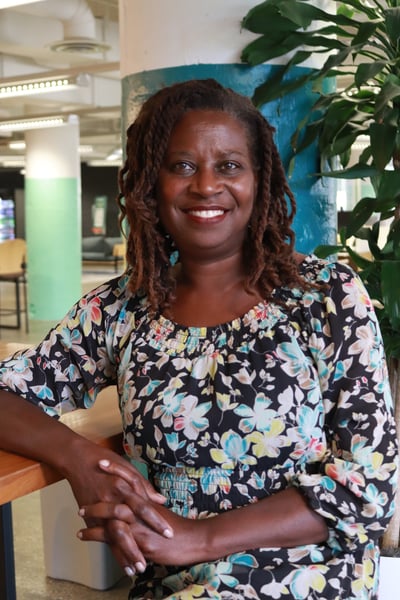
“Nonprofits provide essential services that strengthen our communities, yet their contributions are often undervalued even as the demand for their work continues to grow,” says Harris. “I appreciate that MCR recognizes these challenges and provides organizations with the guidance and resources they need to proactively address issues or respond to emerging problems.”
Problems, Harris says, communities and the organizations that represent them need not solve alone.
“To me, community is when a group of people recognizes that they are stronger together than they are individually. Whether working with nonprofits, government agencies, funders, or residents, I believe community is about fostering relationships that enable collective problem-solving and create lasting, positive change.”
In joining the legal team, Harris sees her skills as an attorney as going beyond making sure nonprofits are in structural legal compliance. She sees her background as a lawyer as resource when building systems across the sector.
“Legal guidance helps organizations build sound governance, develop sustainable policies and practices, and address issues before they become barriers to success. But just as importantly, legal professionals can serve as strategic partners, helping [sector] leaders think thoughtfully about how they design and implement programs, manage risk, and make decisions that strengthen their long-term impact.“
This community-centered approach to consensus building is just one more example of a methodology that extends across MCRs legal work. With the expansion of the team, the department also builds broader service capacity to programs that have existed since the organizations inception.
The importance of relationships
MCR’s legal programs have always functioned through relationships founded on trust developed over decades of service. However, service without human connection is just a utility. Because a core value of MCRs work is community rootedness, the organization strives to make sure the team isn’t just aware of the communities we work in, but actively part of them. This means being present at events, supporting programming, sitting on boards, and more broadly engaging with the people that power the sector.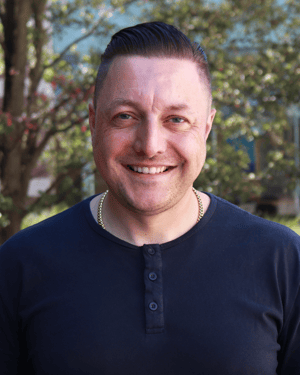
“If through it all we only know your organization and don’t know you by name we aren’t doing our job,” says Justin Sheehan, Director of MCR Legal Programs, maybe. “Now ideally, we are all in this work for the same reasons. I say ideally, because we of course come from different backgrounds and that means we experience the economics and politics at play in very different ways. But the ideal is that we are all in this game because we want to make sure everyone gets their needs met. But I have to actually listen and get to know you to understand what you mean when we’re talking.”
By strengthening our Legal team, Sheehan sees MCRs efforts to form those relationships as more likely to succeed.
“Even though our team can’t be everywhere at once, more people can meet more people. And if their hands aren’t tied by a long list of other people waiting in line, we can actually break bread together.”
Building on a legacy of service
To meet the needs of organizations doing work on the ground, MCR is committed to ensuring that the infrastructure of support available to nonprofits is robust, both internally and externally. By adding team members that are able to focus on both, Michigan Community Resources demonstrates a holistic approach to organizational strength. In order to meet the moment, MCR is making sure its core programming reflects the needs as expressed by the community organizations they serve. As Sheehan explains,
"Lawyers are bound to a certain number of pro bono hours. It's something you have to do. What you don't have to do is treat that number as the limit of your compassion. If we are serious about supporting organizations, we have to be able to show up to every consultation ready to listen. I'm excited to have more people that care about how this work is done as much as they care about what work gets done."
MCR's new staff members can be reached by email at cburgam@mi-community.org and fharris@mi-community.org
You can learn more about the services we provide to nonprofits by following the link provided here.